
What Are Signs of a Bad Paint Job in Los Angeles?
By the Painters LA Team | Updated: October 2026
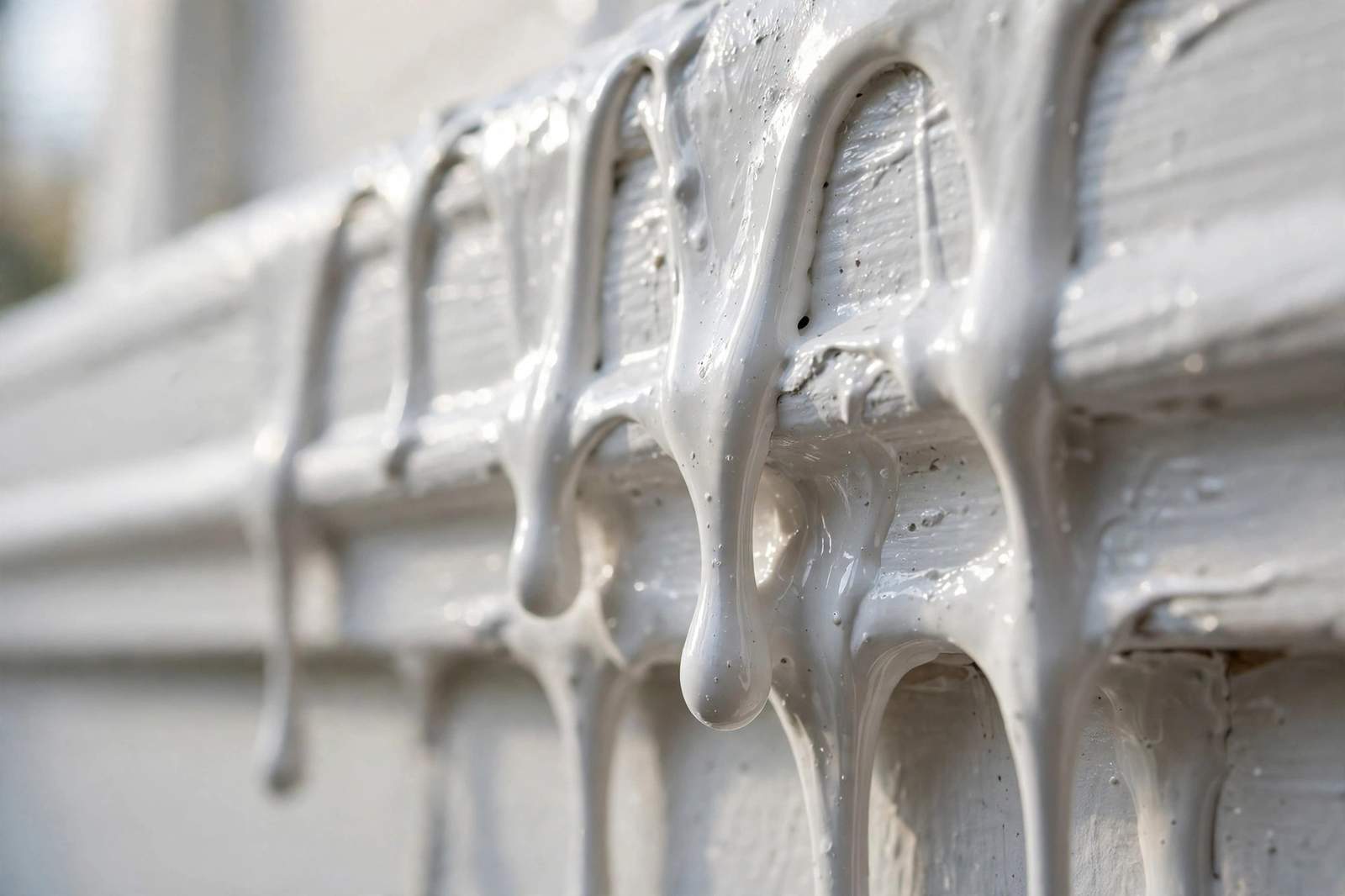
Signs of a bad paint job include drips, runs, and sags in the finish; visible brush or roller marks; streaky or uneven coverage (flashing); peeling, bubbling, or cracking paint; stains bleeding through; and mildew growing under the finish. If you can spot the flaw from six feet away in normal light, it’s a bad job — not your imagination.
A quality interior paint job should last 5–10 years, and exteriors 5–7 years before needing attention. So peeling or bubbling within the first 1–2 years points to bad work, not aging. Most professional painters warranty workmanship for 1–3 years against peeling and blistering. Paint applied outside 50–85°F is also more likely to fail early. Document every defect with photos the day you spot it — that’s your evidence for a warranty claim.
Bad Paint Job Signs: Quick Diagnosis Table
| Sign | What caused it | What it means for you |
| Drips, runs, sags | Paint applied too thick | Technique failure — sand + recoat |
| Flashing / lap marks | Uneven drying; hot-day flash-drying | Common in LA afternoons — full recoat needed |
| Bleed-through stains | No stain-blocking primer | Skipped step — spot-prime + repaint |
| Peeling / flaking | Painted over dirt, grease, or gloss | Worst sign — may need stripping |
| Bubbling / blistering | Moisture under the film | Could be a leak — investigate first |
| Stucco cracks showing | Cracks not patched first | LA-specific prep miss |
The best fix is prevention — ask the questions that prevent this before anyone opens a can.
Surface Defects: What a Sloppy Finish Looks Like
Run your hand along the trim and doors — you should feel glass, not ridges. Drips, runs, and sags happen when paint goes on too heavily.
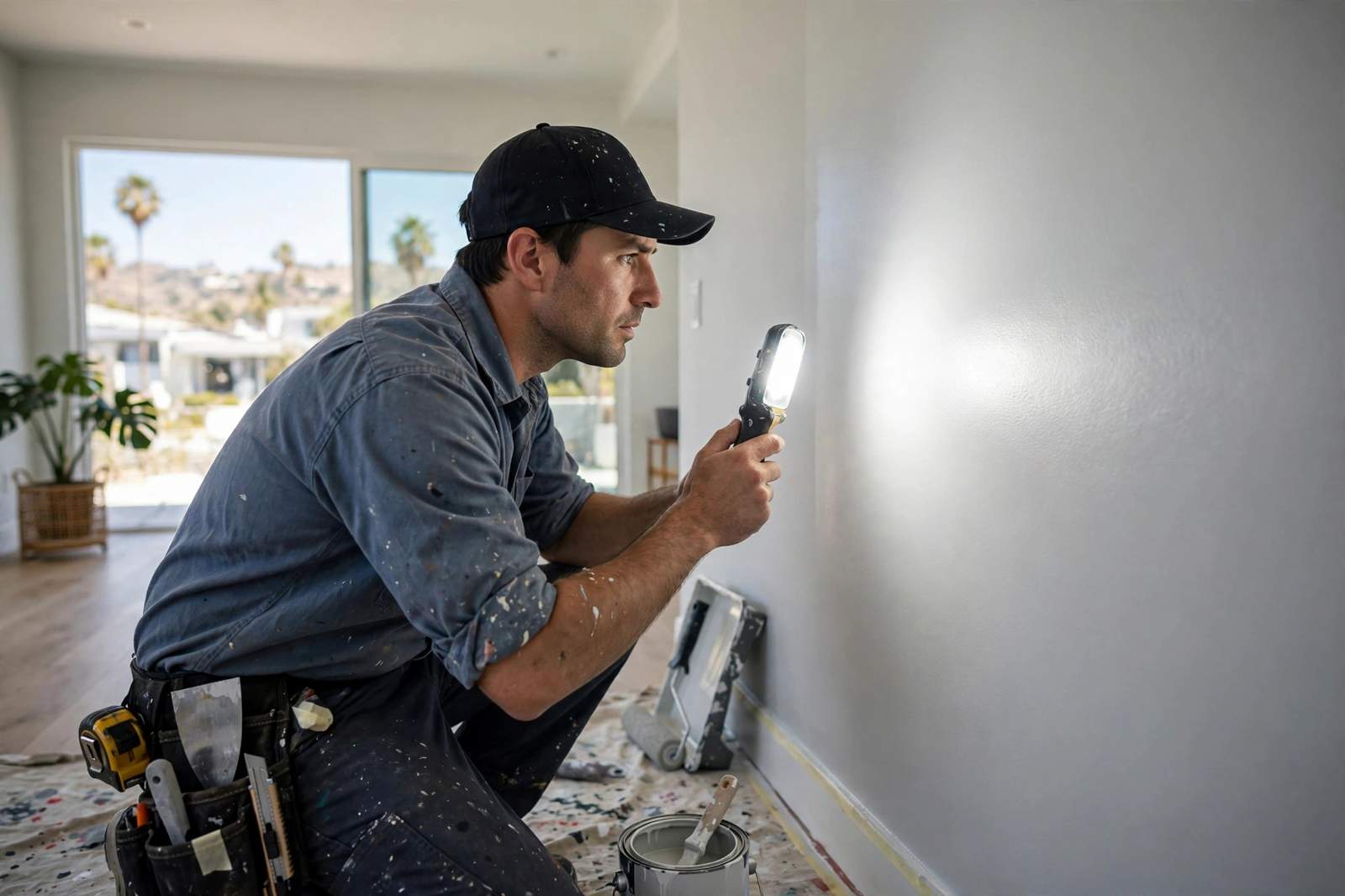
Look at the walls in daylight from six feet back. Visible brush or roller marks, or a gritty texture, mean the wrong roller nap, overworked paint, or debris in the finish.
Check the cut lines where walls meet ceilings and trim. Wavy edges, paint on glass or outlet covers — the hallmark of rushed masking. None of these should exist on a professional job — they’re 100% technique, 0% materials.
Coverage Failures: When the Paint Doesn’t Cover
See the old color ghosting through in thin spots? That’s one coat where two were needed, or cheap paint spread too far. Streaks never fix themselves.
Flashing — shiny and dull patches where wet and dry edges overlapped — happens when painters work too slowly on a hot wall. In LA’s afternoon heat, this is especially common.
Bleed-through (water stains, smoke, tannin showing through) means no stain-blocking primer was used. One primer plus two finish coats is the professional standard — single-coat promises are a red flag.
Prep Failures vs Normal Wear: Knowing Which You’re Looking At
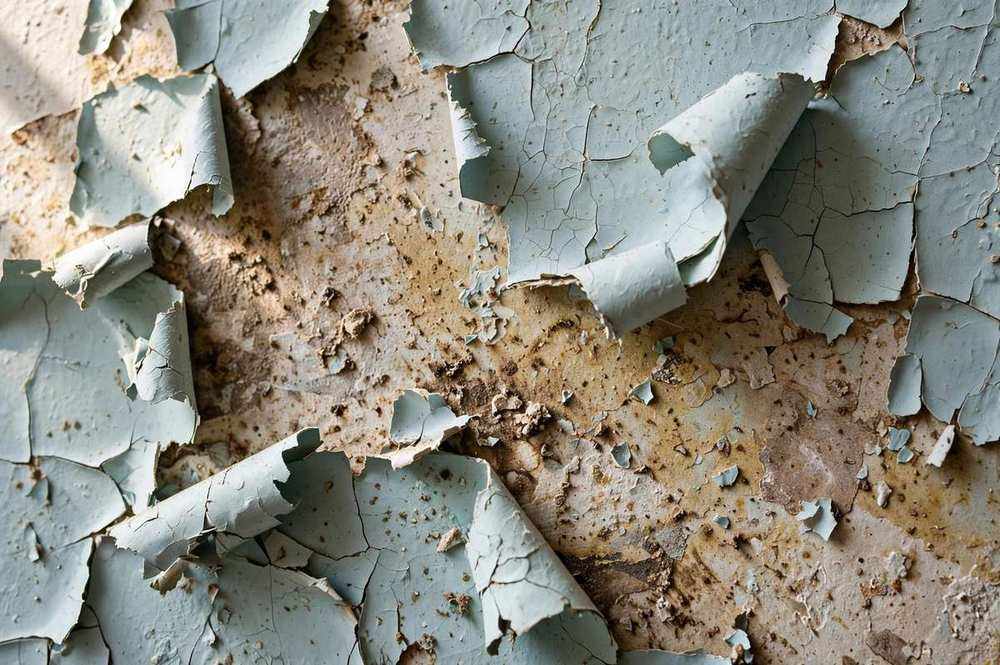
Peeling paint lifting in sheets is the number-one sign of skipped prep — paint over grease, dirt, or gloss without proper wall cleaning before painting and primer.
Bubbling means paint bubbles are usually a moisture problem — but check for leaks first. Blisters near plumbing may be a water issue, not a paint issue.
The key distinction: peeling within 1–2 years means a bad job (interior paint should last 5–10 years). Chalking after 7+ years on a sun wall is normal aging.
Our Los Angeles painting team puts the warranty in writing before we open a can. Most pros warranty workmanship for about two years — no written warranty is itself a red flag. If they won’t honor it, file a complaint with the CSLB.
What Bad Paint Jobs Look Like in Los Angeles
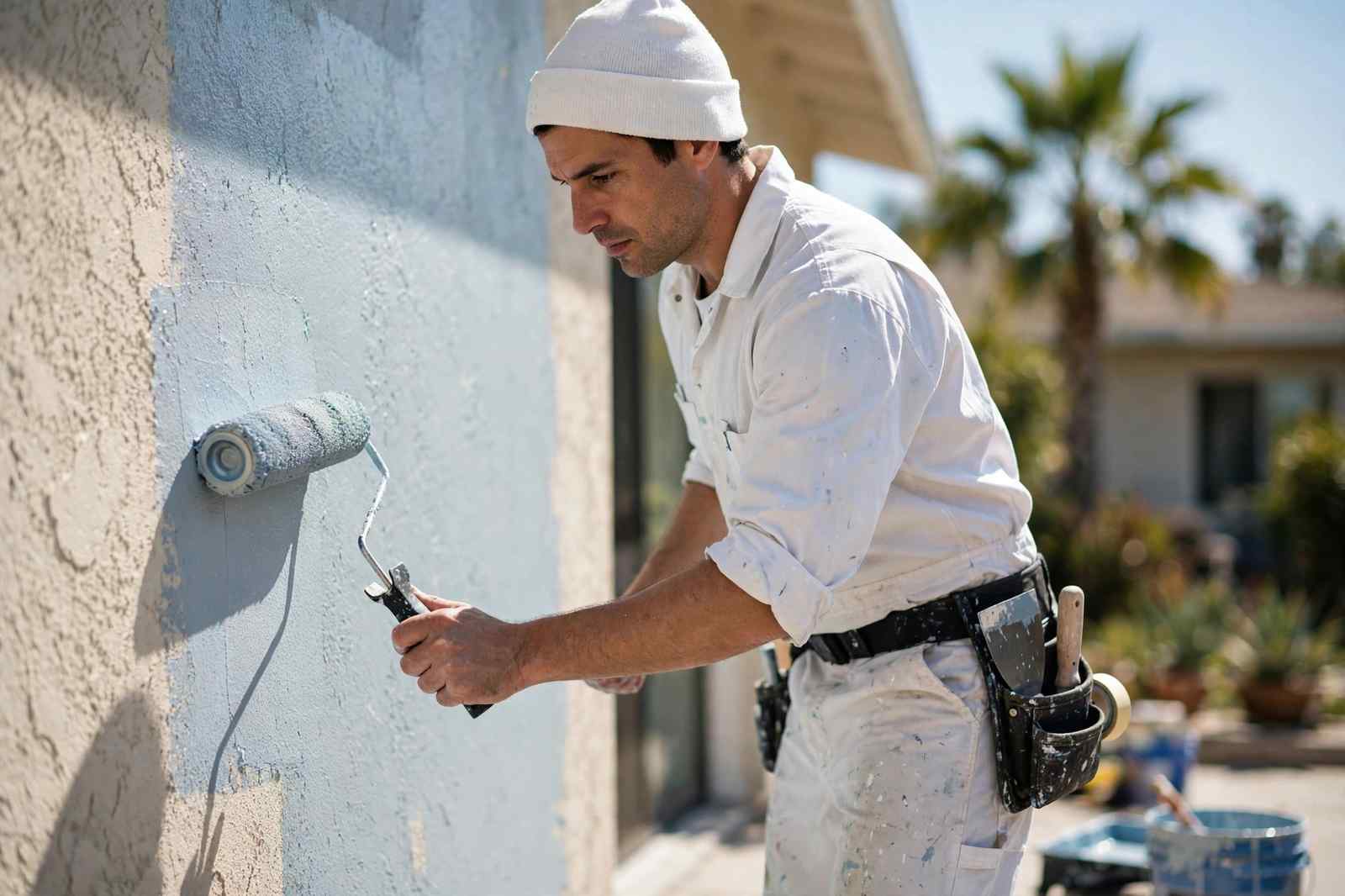
LA’s UV is brutal on south and west walls — chalking within 2–3 years can be normal there. But the same failure on a shaded north wall in year one means cheap paint or no primer.
Gritty exterior texture often means the crew painted on a windy Santa Ana day, embedding dust in wet paint. A pro reschedules; a cheap crew paints through it.
Hairline stucco cracks are on nearly every LA home. If they telegraph through new paint within months, the painter skipped elastomeric patching — the most common LA-specific prep miss.
LA’s low humidity plus 90°F afternoons make paint dry mid-stroke, causing flashing. Pros paint exteriors in morning shade — and use paints formulated for intense sun exposure like Dunn-Edwards’ exterior lines.
Frequently Asked Questions
How soon should I complain about a bad paint job?
Immediately — photograph defects the day you spot them. Warranties run 1–3 years; early reporting strengthens your claim.
Can a bad paint job be fixed without repainting everything?
Sometimes. Drips and flashing can be spot-sanded and recoated, but peeling from bad prep means stripping to a sound surface first.
Why is paint failing faster on my south-facing wall in Los Angeles?
LA’s UV breaks down binders fast on sun walls. Chalking after years can be normal — failure in year one means cheap paint or skipped primer.
How much does it cost to fix a bad paint job in Los Angeles?
Typically 50–100% more than the original job — stripping and re-prepping adds labor. Get the warranty claim in writing first.
Will my painter fix a bad paint job for free?
If it’s within the written warranty (usually 1–3 years) and caused by workmanship — yes. Get warranty terms before work starts.
Ready to Get Started? Our Team Is Standing By.
Spot any of these signs on your walls? Painters LA warranties every job in writing — and we’d rather you inspect our work hard on day one. Call (424) 540-2190 for a free evaluation anywhere in Los Angeles.
Related Posts
- What to Ask a Painter Before Hiring in Los Angeles
- Does Painting Increase Home Value?
- Is It Cheaper to DIY or Hire Painters?